Lynwood Music
Publishers & Promoters of Andrew Downes
andrewdownes.com
9, St Mary’s Court, Ely, CB7 4HQ ▪ +44 7897 873765 ▪ downes.paula@gmail.com
PRESS RELEASE
Prima Facie to release 3rd album in the Philharmonia’s trilogy celebrating the choral works of Andrew Downes (1950-2023)
New Dawn
Released 29th January 2027 - PFCD283

Paula Downes (soprano), Eleanor Minney (mezzo-soprano)
Samuel Boden (tenor), Simon Grant (bass)
Philharmonia Orchestra, Philharmonia Voices,
David Trippett
|
“gorgeous writing” BBC Radio 3 |
“vivid monumental works” British Music Society |
NEW DAWN, Op. 70 (1999)
Oratorio in two parts for SATB soloists, chorus and orchestra, with guitar ensemble
Part I
- A spirit is departing
- Journey (tone poem)
- Awaiting Dawn (chorus)
- Summer Dawn
Part II
- Kitchi-Manitou (tone poem)
- Invocation
This final disc in the Philharmonia’s trilogy of the late composer Andrew Downes’ music, presents the premiere recording of New Dawn, a six-movement oratorio for large symphony orchestra, SATB soloists and chorus, and guitar ensemble. It is an ecological hymn to the earth. Its six movements tell the story of the human life-cycle, the journey of a soul from death to rebirth, and humanity’s shared place within the wider world. It combines choral splendour, orchestral colour and a compelling message of renewal through nature. Downes sets a series of nineteenth-century poems translated from different North American Indian tribes, balancing textural extremes, from epic tone poems (movements 2 and 5) to an a cappella prayer (movement 3).
Composed in 1999 to mark the new millennium, New Dawn stands as the most substantial of Downes’ works for choir, soloists and orchestra. Commissioned by Birmingham Conservatoire (whose guitar ensemble featured prominently), it received its first performance at the Adrian Boult Hall in 2000 under Stephen Lloyd, before receiving a second performance in King’s College Chapel, Cambridge, under Stephen Cleobury the following year.
The work’s richly heterodox musical language blends the influence of the English choral tradition, particularly that of Howells, with references to Native American chanting and drumming, New York jazz, Mexican dance ostinatos, and soaring operatic lines, all amid a captivating evocation of life’s primal rituals: death, burial, transcendence, conception, rebirth.
“well crafted, technically impressive and thoroughly professional”
★★★★★ Choir & Organ
“There’s a Sibelian Quality to Downes’ work – wide open spaces that entrance and unnerve.”
BBC Music Magazine

Photos by Matthew Johnson
Four choral movements are interwoven with two orchestral tone poems, creating a sound world that moves between contemplation, celebration and mysticism. From the solemn processional character of “A Spirit is Departing” to the ecstatic affirmation of the final movement, “Invocation”, New Dawn offers listeners an expansive and uplifting musical experience.
In life, Downes relished the music of non-European cultures. Here Mexican drum patterns, Indian heterophony, jazz trumpets, and modal harmony are all enlisted to express universal themes of belonging. The texts celebrate the natural cycle of life in a worldview that sees humanity as part of, rather than separate from, the rejuvenating earth. For musicologist Jeremy Dibble this is all threaded together through the English choral tradition: ‘much of the choral style, derives its language from those poignant dissonances exploited so effectively by composers such as Parry, Stanford, Walton and Howells (whose Lydian imprint is often pervasive)’.
A quarter of a century after its composition, New Dawn remains strikingly relevant in an age of climate change. Its message of interconnectedness, gratitude and renewal speaks powerfully to contemporary audiences, while its vibrant orchestration, evocative brass, and deeply expressive choral writing reaffirm Andrew Downes’ place among Britain’s most distinctive and imaginative musical voices.

As conductor David Trippett explains:
“The magnificence and beauty of nature was Downes’ guiding star, his eternal muse. With an uncanny instinct for conjuring sound pictures, New Dawn evokes the epic time of the natural world entangled with human rituals of life and death. This music has a fundamentally positive message for our age of climate consciousness.”

“Andrew Downes’ melodies constantly beguile and delight the ear in a rewarding score of integrity and conviction that shares the virtues of the English choral tradition at its finest … a composer of refreshing honesty and directness”
MusicWeb International
Andrew Downes: photo credit Paul Cartwright

Andrew Downes was born in Handsworth, Birmingham, in 1950, into a well-known Midlands family of musicians. He won a choral scholarship to St John’s College, Cambridge, where he specialised in composition, and in 1974 went on to study at the Royal College of Music with Herbert Howells, who described him as ‘one of the most effective composers coming to me these days. I have very considerable hopes for him’. His emergence as a leading international composer was combined with a strong academic profile as an innovative and inspired educator: he created and was Head of the School of Composition and Creative Studies at the Birmingham School of Music (now Royal Birmingham Conservatoire) for 30 years, and following his retirement, devoted himself solely to composition. His output included an opera, six symphonies, numerous concerti and chamber works, song cycles, piano music and a large body of choral and sacred music.
Downes’s music has been performed in many leading concert halls, cathedrals and festivals worldwide, and has been broadcast on BBC Radios 2, 3 and 4, BBC TV, Czech Radio, France Musique, Italian TV, Austrian Radio, Dutch Radio and Central Peking Radio.
Over 30 CDs of his music have been issued on a range of labels. His numerous commissions included The Marshes of Glynn, for the Royal Opening of Birmingham’s Adrian Boult Hall in 1986; the overture In the Cotswolds for the opening concert of the Three Choirs Festival; song cycles for Sarah Walker and John Mitchinson, both premièred on BBC Radio 3; anthems (Opus 31, Nos 1, 2 and 3) for the BBC Radio 4 Daily Service; and the overture Towards a New Age, premièred by the Royal Philharmonic Orchestra at Symphony Hall, Birmingham. Downes’s Concerto for Four Horns and Orchestra was commissioned for and premièred by the Czech Philharmonic Orchestra in the Dvorak Hall, Prague, in 2002, and recorded by Czech Radio the following year. His Sonata for Violin, Horn and Piano was premièred by the Brahms Trio Prague at the Suk Hall of the Rudolfinum, Prague, in 2008, and subsequently released on the Czech Philharmonic’s Artesmon label. Downes’s Piano and Horn Concertos were premiered at Birmingham Town Hall in 2009 and 2012 respectively. In 2016, the Artesmon label released a disk of Downes' Symphonies and Overtures, recorded by the Czech Philharmonic Orchestra in the Rudolfinum, Prague under Ondřej Vrabec.
He died on 2nd January 2023, leaving a legacy of over 120 works. A prolific composer, he wrote every day until the last week of his life.
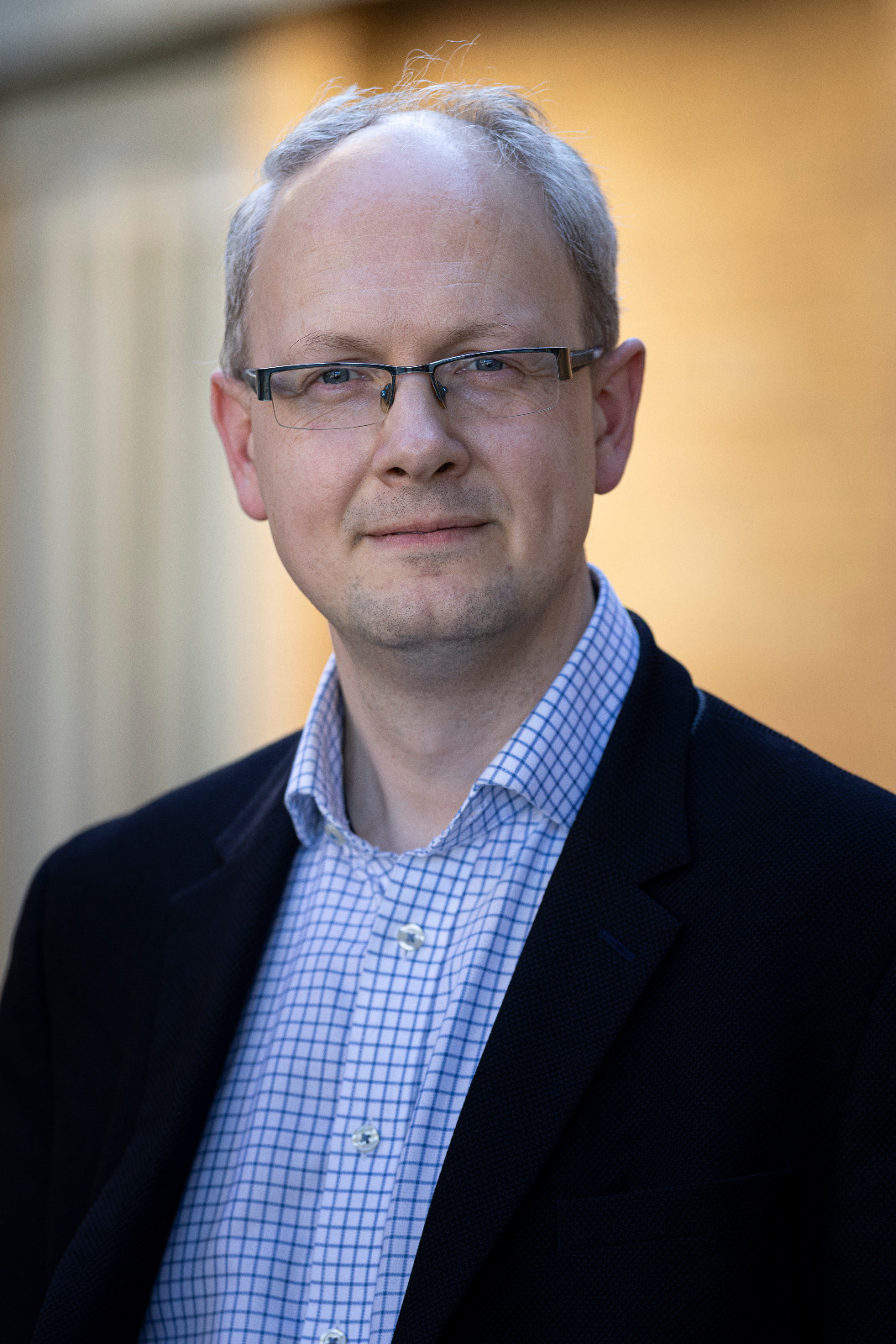
David Trippett is Chair of the Faculty of Music at the University of Cambridge, and a Fellow of Christ’s College.
As a pianist and conductor, he has performed within Europe, the UK, in China, and on both coasts of America in venues from the Liszt Academy in Budapest and the Britten-Pears Festival, Aldeburgh to the Shanghai Conservatory and the Library of Congress in Washington DC. His realistion of Liszt’s Italian opera Sardanapalo between 2017-19 resulted in the work’s first critical and performing editions. Its premiere recording with Kirill Karabits and the Staatskapelle Weimar was among the Guardian’s Top 10 Discs of 2019, receiving Gramophone’s Editor’s Choice and Diapason’s découverte. It became the best-selling classical CD in the UK, and has now been performed in seven countries.
As a scholar, his research focuses on nineteenth-century music and intellectual history, Richard Wagner, and the history of science. He is author of Wagner’s Melodies (2013), editor and translator of Carl Stumpf, The Origins of Music (2012), and more recently he co-edited The Cambridge Companion to Music in Digital Culture (2019), Opera and the Scientific Imagination (2019), and Wagner in Context (2024). Awards for research include the Alfred Einstein and Lewis Lockwood Prizes of the American Musicological Society, the Bruno Nettl Prize of Society for Ethnomusicology, and a Philip Leverhulme Prize. Between 2015-2020, he directed a project on ‘Sound and Materialism in the Nineteenth Century’. Arising from this, his latest book, Sound in Mind and Body, is forthcoming with Oxford University Press.
Press Releases for the other two Philharmonia Releases:
A St Luke Passion & Sacred Choral Works
The Marshes of Glynn & Song of the Prairies
Spotify:

Apple Music:




Soundcloud: